


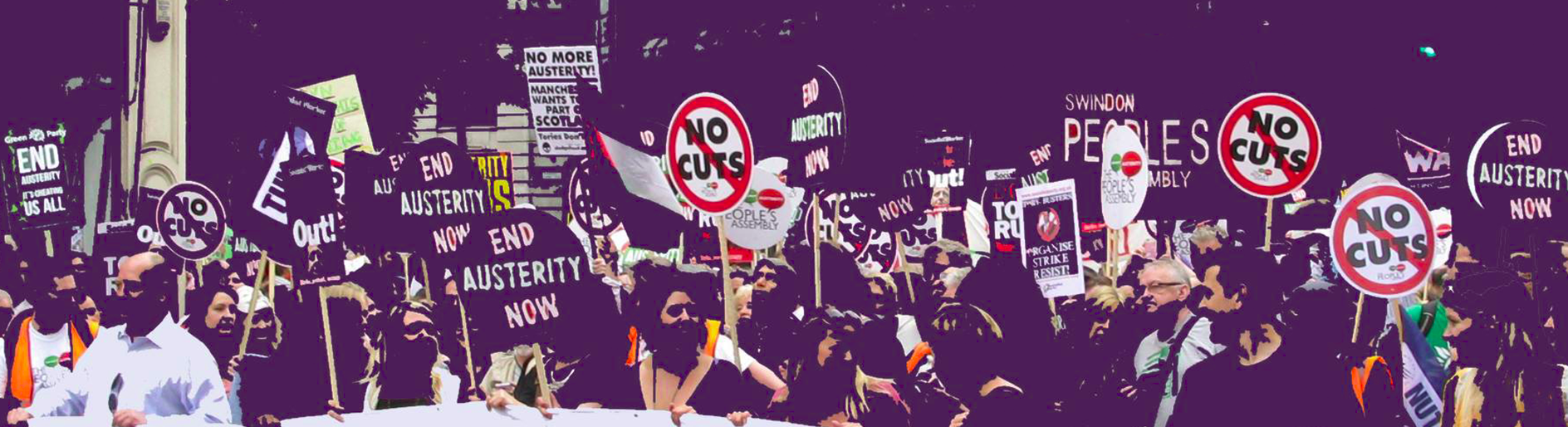

On the Today programme this morning, David Cameron defended the coalition's £6bn cuts - but the rationale for the move has shifted since the election.

On the Today programme this morning, David Cameron defended the coalition’s announcement on Monday of £6 billion in spending cuts in 2010-11. But the rationale for the move has shifted since the election.
On Today, David Cameron said:
“The key thing is we promised £6 billion of spending reductions, we have delivered £6 billion of spending reductions, that is good for our economy, it shows us getting to grips with the deficit.”
But in March, a Conservative Party press release was clear that cuts this year would be limited to “cutting waste”:
“The Conservatives have announced that a Conservative Government will stop Labour’s tax rise on jobs by cutting waste…
“A Conservative Government will take immediate action to start cutting Government waste, in order to spend £6 billion less in 2010-11 than Labour’s plans…
“Former Government advisers Sir Peter Gershon and Dr Martin Read, now members of the Conservatives’ Public Sector Productivity Advisory Board, advise that savings of £12 billion across all departmental spending are possible in-year without affecting the quality of front line services.”
On Monday, George Osborne and David Laws announced £6.25 billion of cuts rather than £12 billion. But these include reductions in spending programmes such as scrapping the Child Trust Fund, Future Jobs Fund, and cutting student numbers.
Although the IFS outlines that “the likely reduction in borrowing in 2010-11 is around £5 billion”, the Government’s planned tax cuts are likely to erode this in 2011-12. The coalition agreement said:
“We will increase the personal allowance for income tax to help lower and middle income earners. We will announce in the first Budget a substantial increase in the personal allowance from April 2011, with the benefits focused on those with lower and middle incomes.
“This will be funded with the money that would have been used to pay for the increase in employee National Insurance thresholds proposed by the Conservative Party, as well as revenues from increases in Capital Gains Tax rates for non-business assets as described below.
“The increase in employer National Insurance thresholds proposed by the Conservatives will go ahead in order to stop the planned jobs tax.”
The total cost of this package is likely to be similar to the £5.6 billion cost of the Conservative party’s pre-election National Insurance cuts. This can hardly be called getting to grips with the deficit.
Left Foot Forward doesn't have the backing of big business or billionaires. We rely on the kind and generous support of ordinary people like you.
You can support hard-hitting journalism that holds the right to account, provides a forum for debate among progressives, and covers the stories the rest of the media ignore. Donate today.
23 Responses to “Are the Tories really getting to grips with the deficit?”
trevmax
255 British deaths in Falklands #defensive war# http://en.wikipedia.org/wiki/Falklands_War
288 British Deaths Afghanistan #unprovoked offensive war#
http://www.mod.uk/DefenceInternet/FactSheets/OperationsFactsheets/OperationsInAfghanistanBritishFatalities.htm
Brown borrowed and spent. There’s no integrity to that. His record in the credit crunch was to throw money at it. He saved the banks alright without even reforming them.
trevmax
@Lizzy
“we shall remnind them that Labour spent the majority rebuilding the hospitals they were born in, the NHS they were treated for free in, the schools that educated them, and the FE places”
Thats all PFI. I will be dead before that’s paid off
Fat Bloke on Tour
trevmax
Unfortunately the Falklands wasn’t the only place where soldiers died under Thatch’s watch.
Consequently wrong again.
A’stan = The conflict may be many things but it is not an “unprovoked offensive war”.
On the subject of the Falklands you have shot yourself in both feet with just the one bullet.
Labour / GC stopped the Argies attacking the islands twice in 76 and 78. Timely naval voyages and a little scuttlebut reaching the Spanish gov meant that the plans were never carried out.
Thatch managed to lose the islands 12 months after she decided to go down in history as a cutter and not a warrior. 81 budget and MOD / Navy cuts showed her in her true colours.
Selling off a carrier, running down the LPD capability and pensioning off the Falklands patrol ship were not the best signals to send to the junta.
Consequently Thatch lost the Falklands.
The Navy and the Army won them back, offensively.
She had nothing to lose but other peoples children’s lives.
Away and through shite at yerself, ya numpty.
lozza
@trevmax
Yeah! But that is capital investment, – not liabilities.
PFI does not fund the day-to-day overheads of running the schools, the NHS, transport etc.
From an accoutning POV long term debt is exactly how you fund the long term growth of a company and is what most ‘commercial enterprise’ is built on, that is how you guarantee the maximum return on capital – you are in it for the long run – not for short-termism.
Anon E Mouse
Fat Bloke on Tour – So you disagree with cutting military spending then? I was in the mob when the Falklands was on and I can assure you there is a difference between defending a peaceful society invaded by a fascist regime and launching unprovoked attacks by showing poodle like support for a US president and misleading the MP’s in the commons as to the threat – 45 minutes anyone?
Anyway your question was about numbers killed and on that you are clearly wrong and “Thatch” never killed anyone – the enemy did…
Finally what tour are you actually on – it sounds like Bob Dylans Neverending Tour without the talent…