Mayors are out of control
Tom Brake is chief executive of Unlock Democracy Last month’s Budget granted England’s mayors more power over the money their […]
Tom Brake is chief executive of Unlock Democracy
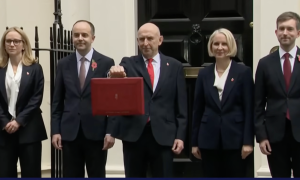
Last month’s Budget granted England’s mayors more power over the money their regions raise. The question is, will the public be any more in control than when Whitehall was in charge?
The Chancellor announced £285 million for new Good Growth funds and areas preparing for devolution, alongside a £1.5 billion borrowing facility for mayoral authorities. From 2027, mayors will receive 20% of business rates revenues – with 100% of business rates to be retained by local and regional governments by 2030 – followed by a share of income tax receipts in 2028. They will also be able to charge a tourist tax.
Together with the English Devolution and Community Empowerment Act, which extends the map of mayoral government and deepens its powers over housing, planning and transport, this represents a substantial transfer of power from Whitehall.
So far, so good, right? The Prime Minister shares Unlock Democracy’s enthusiasm for devolution. We both believe communities should have much greater control over their own affairs, with decisions made as close as possible to the people they affect.
But giving mayors more power does not necessarily give the public more control. That depends on whether people can hold them to account. The Devolution Act makes some provision in this space, beefing up local scrutiny committees. That is welcome. But scrutiny can only go so far, particularly when establishing something as basic as who a mayor has met, and what they discussed, is far harder than it should be.
Take Andy Burnham’s foray into the Manchester City cheating scandal as an example. Only following the PM’s intervention – made in the wake of City being found guilty of colossal, systematic cheating – was the fact of a formal meeting in 2021 between Burnham, then Greater Manchester mayor, and City’s chairman made public. Meanwhile, records of two matchday dinners with the chairman had to be unearthed by the BBC, having been removed from the Greater Manchester authority website.
None of this is to allege wrongdoing by Andy Burnham. The issue is different, and it extends further: why was it so difficult to extract such information? In Whitehall, ministers must publish quarterly reports listing their meetings with outside organisations. Admittedly, their contents and the frequency leave a lot to be desired, but at least they establish minimum standards of transparency. England’s metro mayors face no equivalent obligation.
Research by Unlock Democracy found no regularly published diaries of external meetings for the mayors of Greater Manchester or Liverpool City Region. We could find none for West Yorkshire, either. The Mayor of London does publish a diary of formal engagements every six months, though publication stalled for two years after Mayor Khan’s re-election in May 2024 (this has since been rectified). Even then, entries can be remarkably perfunctory, revealing little to nothing of what was discussed.
Declarations of gifts and hospitality are just as inconsistent. The Local Government Association’s model code recommends declaring gifts worth £50 or more within 28 days, but authorities adopt their own codes. As a result, what the public knows about those in power depends on where they live.
Of course, the existence of disclosure rules does not guarantee their application. A recent investigation by the BBC and the Bedford Independent uncovered records suggesting that Bedford mayor, Tom Wootton – owner of land worth more than £2.7 million affected by the proposed East West Rail route – failed on 15 separate occasions to declare an interest when necessary. Tom Wootton disputes this assessment.
The rights and wrongs of the case will not be settled here. What’s crucial to note is it took a team of journalists examining court documents, land records and meeting minutes to bring these questions to light.
And here lies a second problem. Since 2005, at least 293 local newspapers have closed. In Birmingham, the National Union of Journalists warns that major job cuts will render once proud local papers “irrelevant to their communities.” And the BBC, already under severe financial pressure, plans to merge its education and social affairs editor roles, another sign of the squeeze on resource-intensive reporting that seeks to bridge the gap between abstract policy and on the ground experience.
Not only is the hollowing out of local media bad for accountability, it’s bad for governance. A healthy local media is one way that authorities get their message out and discover where they’re going wrong: where services are failing, which grievances are going unanswered and what citizens actually make of their priorities.
Without it, mayors risk gaining powers while losing touch with the communities they’re there to serve. The resulting distrust and alienation will serve nobody except bad-faith actors looking to make political capital – or simply a quick buck – off people’s discontent.
Devolution promises greater local control, and rightly so. But bringing power closer to people is only one part of the picture. Giving mayors the means to act must go hand in hand with giving the public the means to hold them accountable. Otherwise, we risk fixing one democratic deficit only to create another.
Left Foot Forward doesn't have the backing of big business or billionaires. We rely on the kind and generous support of ordinary people like you.
You can support hard-hitting journalism that holds the right to account, provides a forum for debate among progressives, and covers the stories the rest of the media ignore. Donate today.
Donate today