Andy Burnham’s ambition on devolution is the right one. Now Labour has to make it last
Andy Burnham has staked his premiership on rewiring the state. In his first speech in Downing Street he promised to […]
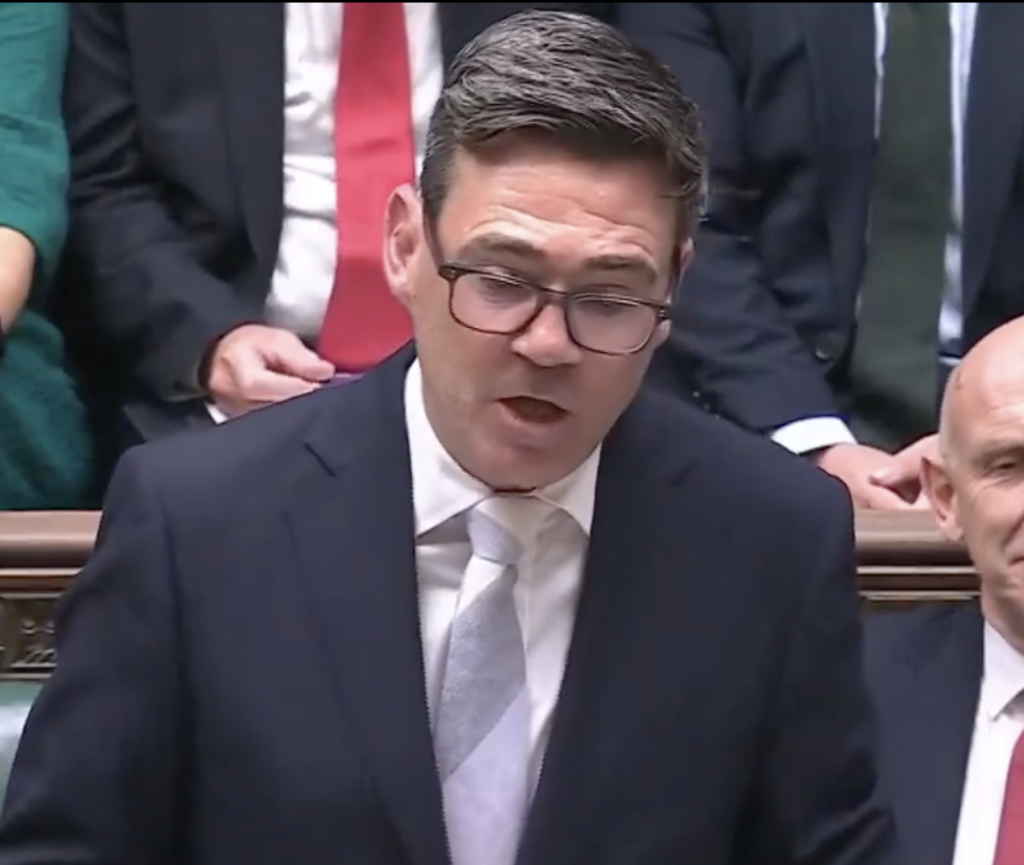
Andy Burnham has staked his premiership on rewiring the state. In his first speech in Downing Street he promised to take power out of Westminster and carry it into every postcode in the land, and on 30 July his government put the first real detail behind it: Mayors keeping a share of income tax and business rates, and a new rule that Whitehall must justify holding on to any power rather than handing it down. He has said the days of Whitehall fighting devolution are over for good. For a party that has argued for decentralisation for a decade, this is the moment it becomes real.
The ambition is not in doubt. What matters now is making it a success: a settlement that outlives this government, not a burst of energy that fades with it. Our new paper looks at six European countries that have decentralised, and together they point to one conclusion. Ambition alone does not make devolution succeed. Leaders devolve with conviction, and then the money is quietly clawed back, or the next government unpicks it, or the reform stalls once the political attention moves on.
Burnham’s instincts already match what worked abroad. His “devolve by default” principle, that the question should be why a power cannot be devolved rather than why it should, is almost exactly the reform that set French decentralisation alight in 1982, when one law abolished central sign-off and made councils self-governing overnight. His promise that every department will lend staff and resources to local areas is the lesson Germany proved after reunification, where seconding officials in their thousands is what made devolution actually work.
But in every country that succeeded, the leader did one thing more. They made the settlement permanent before the political moment passed. That is the step ambition tends to skip, and the one that decides whether devolution lasts.
For Britain it means a Fiscal Devolution Act, giving the strongest mayors the power to set a real tax of their own, paired in the same law with an equalisation formula that tops up areas with a weaker tax base, so a poorer place is never left behind when richer ones raise more. This is the Danish model, and Denmark succeeded precisely because it legislated the tax power and the protection together, each making the other work. And it means writing the funding formula into primary legislation, so reversing it takes a public fight in parliament, not a quiet Treasury decision.
For a Labour audience the reason is plain. Reform now runs councils, and could one day run the country. The way to protect devolution from a future hostile government is not to hope, but to build it on rules that bind whoever inherits it, with no discretionary pot a later minister could turn against Labour areas. France shows the danger: it wrote financial autonomy into its constitution, then abolished the local taxes underneath it anyway. Devolved money has to be an entitlement set in law, not a grant that can be taken back.
Andy Burnham has spent a decade arguing that power belongs closer to people. He now has the rare chance to make that permanent. The clearest lesson from Europe is to legislate early, while the government is strongest and the ambition is fresh. Do that, and rewiring the state becomes not just this government’s mission, but part of Labour’s lasting legacy.
Mike Buckley leads the Independent Commission on UK EU Relations. Their new report, ‘How to devolve: What Europe’s transitions teach a new Government’, is available here.
Left Foot Forward doesn't have the backing of big business or billionaires. We rely on the kind and generous support of ordinary people like you.
You can support hard-hitting journalism that holds the right to account, provides a forum for debate among progressives, and covers the stories the rest of the media ignore. Donate today.
Donate today