Natalie Bennett: How a spat over the railways made me realise we need to up our expectations
It's time to demand a real service and take back travelling by train as the natural, economical choice.
In the UK, we’ve been trained to be grateful for any public service or policy short of the terrible. We need to raise our expectations.
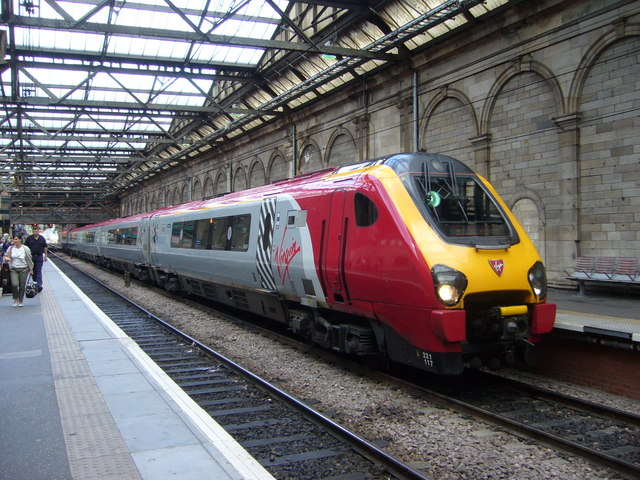
If I did Twitter rows, I would have been in one last week. I tweeted in pure exasperation about the uncomfortable, empty, hideously expensive, slow 5.31am train from Sheffield to London.
I clearly hit a nerve in the railway community, for I got a flood of angry responses. These responses were interesting, because I came to realise just how different the respondents’ views of what is reasonable and mine are – and why.
Many claimed that a £68, booked-train-only fare was “reasonable” (compared to the walk-up £100 peak-hour fare), that the HST-type trains were “the best around”, and that the reservation slips on the top of the seats showed my complaint about emptiness was wrong.
Some of the disputes (including about armrests) reflected simply the usual differences around perception of comfort. But some was much more serious.
First, on cost. Travelling by train, by any public transport, should be the cheapest, most convenient, natural choice.
One correspondent said he commutes to London regularly – by car – and it costs £25. That’s about what I think the train fare should be, certainly for a pre-booked, fixed train fare, even one booked only a few days in advance.
Over the past six or seven years I have spent more hours than I care to count on British trains, probably something like 20 to 25 hours a week on average, to every corner of England and Wales. So I know the £68 isn’t particularly bad.
But I also have spent a lot of time on trains in continental Europe, and that’s helped shape my perception of what the cost should be.
One recent journey was in Finland, from Helsinki to Tampere, roughly similar in time to the aforementioned trip. It cost about £25, pre-booked not very far in advance.
Those journeys have also shaped my thinking on train comfort.
Otherwise known as daylight robbery: £68 for an advance purchase, 5.31am booked train only, @EMTrains #Sheffield-London train. Fume-spewing, slow, clapped-out, uncomfortable seats, no powerpoints. Almost empty. Wonder why. #privatisation pic.twitter.com/e2rXaHqM2p
— Natalie Bennett (@natalieben) June 21, 2019
I tweeted also from that Finnish train – amazed to find a play space for toddlers and young children. People from around the world expressed astonishment and approval.
I found a similar facility on a train in the Czech Republic, on my way back from the climate talks at Katowice, a Pendolino utterly unlike the cramped, airless Virgin examples of the breed.
It had far more row space, so there was no jostling for an arm-rest or carefully arranging your elbows and knees before you move that Brits “enjoy”.
Another point of Twitter conflict was my statement on the “emptiness” of the train. Most of the train was only occupied halfway through the journey, from Leicester to London.
Catch a train through Germany or Scandinavia and you see more people joining and leaving at intermediate stations over a couple of hours. Train journeys aren’t just for a big trip to the capital. They are how you get around the country.
That’s how it should be here, but it often feels like it’s only London traffic and parking difficulties that pushes people on to UK trains.
Some correspondents were infuriated by my use of the hashtag #privatisation. They protested that many aspects are not decided by the train operating companies.
True, the concentration of our national economy on London and the South East can’t be laid at their door. But paying for the profits of foreign multinationals – or funding train systems in other countries – just adds insult to injury.
I’m writing this from a (now publicly-run) LNER service to London. There’s a real effort to provide a decent service – the new menu is very good, unlike on East Midlands, there’s a discount for reusable coffee cups, and staff are enthusiastic.
With the East Midlands franchise soon to change hands, a guard told me recently that “they’re not fixing anything”, which is obvious, and staff seem demoralised. That’s definitely a product of the privatisation model.
It all reminds me of a conversation with a Scandinavian ambassador about home insulation. At one point, she said: “I’ve never been so cold as I’ve been in Britain”. We still expect to feel cold as standard.
When I moved to the UK in 1999, I thought the quality of life wasn’t that much below the Continent. Yet as they’ve surged ahead, we’ve gone backwards.
We expect to be uncomfortable, overcrowded, overcharged. We’re grateful when it isn’t quite as bad as we expected.
It’s the product of 40 years of Thatcherism, a decade of austerity, decades of perception that private is good, public bad, and that any public service is unlikely to be what you really want.
We need to change the physical fabric, get the investment and policies we need. But we also need to demand far, far better than what we have now. Let’s look around our continent, look at the best they have, and demand the same.
Natalie Bennett is the former leader of the Green Party.
Left Foot Forward doesn't have the backing of big business or billionaires. We rely on the kind and generous support of ordinary people like you.
You can support hard-hitting journalism that holds the right to account, provides a forum for debate among progressives, and covers the stories the rest of the media ignore. Donate today.
Donate today