Successive governments have allowed the voices of Kashmiris to be marginalised
The United Kingdom must now show the moral courage to act. Above all, it must ensure that the inalienable human rights of Kashmiris remain at the heart of any lasting and peaceful resolution.
Imran Hussain is the Labour MP for Bradford East
As we marked the seventh anniversary of the revocation of Articles 370 and 35A, Kashmir once again stands at a crossroads.
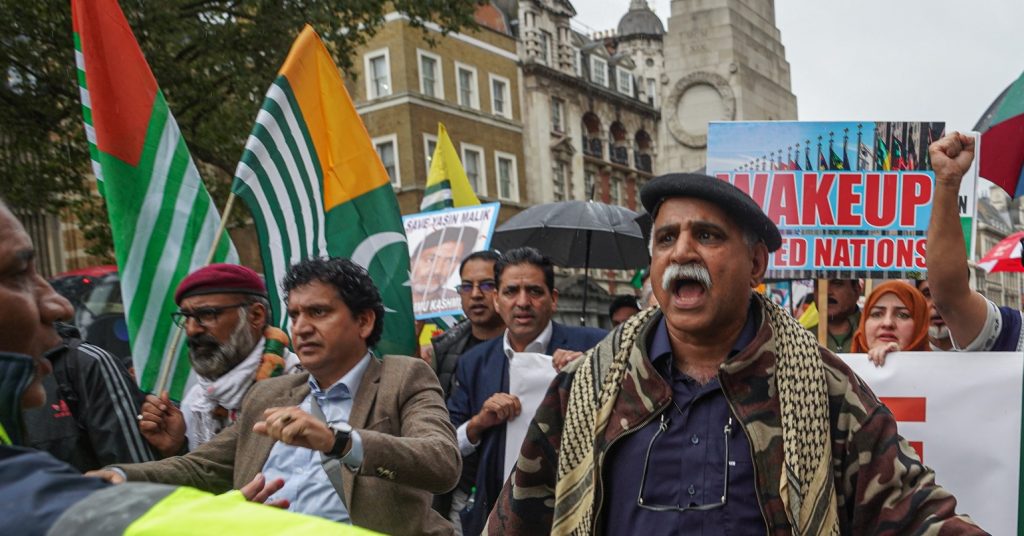
For millions of Kashmiris, including my own constituents in Bradford East, and families all across the UK, the principles of freedom, dignity and human rights remain painfully out of reach. For far too long, the international community has looked away from one of the world’s longest-running and most overlooked human rights crises.
If we are serious about defending universal human rights, Kashmir cannot continue to be the exception.
For more than a decade, I have consistently spoken out against the persecution, oppression and injustice endured by the people of Indian Occupied Kashmir. Their calls for justice have too often gone unanswered. Their fundamental human rights have been violated, and their right to self-determination has been repeatedly denied.
The right-wing Modi Government’s decision on 5 August 2019 to revoke Articles 370 and 35A marked a watershed moment. It stripped Jammu and Kashmir of its special constitutional status and was followed by mass detentions, unprecedented communications blackouts, severe restrictions on civil liberties and the further erosion of democratic rights. It is no surprise that many Kashmiris remember that day as a dark day for Kashmiris
Seven years on, the promises made by the Indian Government have proved hollow. Political leaders, journalists, human rights defenders and ordinary civilians continue to face arbitrary detention and intimidation. The Armed Forces (Special Powers) Act, the Public Safety Act and other draconian legislation continue to grant sweeping powers with little meaningful accountability. Independent human rights observers remain barred, while the voices of Kashmiris themselves are too often ignored.
For decades, successive Indian Governments have sought to suppress not only dissent but the legitimate aspirations of the Kashmiri people. The struggle for dignity, justice and self-determination has not disappeared. It has simply been met with increasing repression.
I have raised these issues repeatedly in Parliament because silence is not neutrality. When fundamental rights are denied, remaining silent simply allows injustice to continue.
It is precisely because I have spent years challenging the systematic human rights abuses in Indian Occupied Kashmir that I am deeply concerned by the recent developments in Azad Jammu and Kashmir.
There is no comparison between the long-term, systematic repression in Indian Occupied Kashmir and the recent events in Azad Jammu and Kashmir. The scale, duration and nature of the repression remain fundamentally different. But this distressing situation must be addressed.
Recent reports of live fire against peaceful protesters, resulting in deaths and injuries, are so deeply troubling. Reports of an increasingly heavy-handed response to demonstrations, communications restrictions and a breakdown in dialogue raise an important question: what message does this send to the international community? Political disagreement must never be met with violence.
It must always be resolved through dialogue.
The recent escalation has also caused enormous anxiety here in the United Kingdom. More than one million British Kashmiris have close family ties to the region. In recent weeks, many constituents have contacted me desperately seeking news of parents, children and relatives they have been unable to reach. For them, this is not a distant foreign policy debate. It is a deeply personal human tragedy unfolding before their eyes.
That is why I, as chair of the All-Party Parliamentary Group on Kashmir, recently coordinated a cross-party letter, supported by more than 65 Parliamentarians, calling on the Foreign Secretary to respond urgently to the deteriorating situation. The growing support across Parliament reflects an increasing recognition that the United Kingdom cannot simply stand on the sidelines while tensions continue to escalate.
I have urged the Government to take five clear steps.
First, it should provide a full assessment of the humanitarian situation in Azad Jammu and Kashmir, including the reported use of live fire against protesters, deaths, injuries and wider security concerns.
Second, it should ensure that British nationals in the region, and British citizens with family members there, receive the support they need and are able to maintain contact with their loved ones.
Third, it should use every appropriate diplomatic channel to press for the immediate lifting of communications restrictions and the restoration of normal communications.
Fourth, it should actively encourage the immediate resumption of peaceful dialogue between the relevant authorities and representatives of the Joint Awami Action Committee.
Finally, it should continue to monitor developments closely while using every diplomatic lever available to promote restraint, prevent further escalation and support a peaceful resolution.
I urge the Government to continue using all appropriate diplomatic channels to support immediate de-escalation, encourage restraint by all parties, and promote a peaceful and lasting resolution with Kashmiri human rights at the heart of it.
Because the United Kingdom has a unique responsibility. Our historic role in the region cannot simply be ignored, nor can the voices of more than one million British Kashmiris whose families continue to live with the consequences of decisions taken thousands of miles away.
For too long, successive British governments have treated Kashmir solely as a bilateral dispute between India and Pakistan. That approach has too often allowed the voices of Kashmiris themselves to be marginalised. Kashmir is, and has always been, an international issue rooted in international law and the inalienable rights of the Kashmiri people.
The world has looked away from Kashmir for far too long.
The United Kingdom must now show the moral courage to act. Above all, it must ensure that the inalienable human rights of Kashmiris remain at the heart of any lasting and peaceful resolution.
Image credit: Alisdare Hickson – Creative Commons
Left Foot Forward doesn't have the backing of big business or billionaires. We rely on the kind and generous support of ordinary people like you.
You can support hard-hitting journalism that holds the right to account, provides a forum for debate among progressives, and covers the stories the rest of the media ignore. Donate today.
Donate today