Andy Burnham can’t transform the country while sticking to the current fiscal rules
Sticking to the 2024 election manifesto and fiscal rules will make it harder for him to deliver the headline promises and the change that he has paraded.
Amidst the march of neoliberalism, Andy Burnham has been anointed the UKs Prime Minister, seventh in the last decade. Corporations and the super-rich care not who is in 10 Downing Street as long as s/he does their bidding. David Cameron, Theresa May, Boris Johnson, Liz Truss, Rishi Sunak and Keir Starmer were all disposable as their political star waned. Like their recent predecessors, they left a legacy of economic stagnation, rising inequalities, poverty and society more divided than before.
Burnham has inherited an economy in which 25.3m people, including 14.9m working adults and 7.7m children, live below minimum income standards. With median employee wage of £31,584 (take home pay £26,260) owning a home is impossible, and millions barely manage. Profiteering is rife. Some 6.16m individuals are waiting for 7.28m hospital appointments. Social care is in disarray. Most of the infrastructure, including water, energy, ports, airports, telecommunications, auto, steel, shipbuilding, internet, artificial intelligence and railway rolling stock are in private hands, leaving the government with fewer economic levers to deliver growth or alleviate poverty. Political parties are funded by the super-rich and dance to their tunes. Party members have little or no say in policy development. Trade unions are weak, civil society is struggling, and the left is too fractured to mount a challenge to the tide of neoliberalism.
Against the above backdrop, Burnham has promised to bring “forward the biggest changes in the last forty years”. This populist slogan may reassure some but can’t be delivered without abandoning neoliberalism. At the same time, Burnham, a former Minister in the Tony Blair and Gordon Brown governments, has promised continuity.
Andy Burnham has pledged to lead a united Labour government free of infighting and factional politics, but that isn’t evident from his cabinet appointments. He has side-lined leading Keir Starmer supporters, but his first his first cabinet consists entirely of neoliberal foot-soldiers. They all supported privatisation of the National Health Service by stealth, greater role for private equity, private finance initiative (PFI), benefit cuts, higher taxes on the poor, erosion of jury trials, appeasement of corporations and super-rich, destruction of universities, degradation of social care and highly damaging fiscal rules,
No one from the left of the party has been given any ministerial role, not even a junior role. One of the problems of the Starmer government was that the cabinet was essentially an echo-chamber, hailing neoliberalism and deaf to the cry for emancipatory change. In the absence of internal critique, Starmer started with disastrous macho policies such as the winter fuel payment cut, disability benefit cuts and continuation of the two-child benefit cap. All were subsequently reversed after backbench revolts and poor showing in local elections. Public trust was never regained.
Burnham may be a smarter politician and would no doubt be accessible to the left but the left won’t be present at the genesis of policies, disturbing capitulation to the City of London and the super-rich. The factionalism embedded within the cabinet does not sit well with the promise ‘the biggest changes in the last forty years’.
Perhaps, the never-ending woes of England’s water industry will provide an early test for the Burnham government. In 2010, when seeking leadership of the Labour Party, Burnham called for “aspirational socialism“. In June 2026, whilst fighting a parliamentary bye-election to return to the House of Commons after a nine-year gap, Burnham said, “If you look at water as an industry as a whole, it’s run predominantly in the private interest rather than the public interest, or in other words, it’s an industry where the shareholders can never lose and the bill payers never win … Public ownership is absolutely an option …. I would say for Thames Water, that is what should be done.” After becoming Prime Minister, he reverted to his previous position of ‘more public control’. A spokesperson for Burnham said he wanted “stronger accountability and better standards … Andy is exploring all possible options for giving the public more control over essential services like water and energy. Note the careful shift from ‘public ownership’ to ‘public control’ which could be stronger regulation, a new regulator, temporary nationalisation or something else. We will soon know.
Burnham has promised to “build a new economy where we put life’s essentials back under stronger public control” … “re-industrialising Britain, using public procurement to back British industry” and “build more council homes”. All of this calls for financial resources. Burnham won’t embrace the Modern Monetary Theory (MMT) and create money. That leaves tax as an option. However, the tax option is severely constrained by his decision to stick to Labour’s 2024 manifesto, which promised no increase in the rate of income tax, employee national insurance and VAT. Such rash promises dogged the Starmer administration and prevented redistribution, recalibration of the tax system, alleviation of poverty and state investment in infrastructure. It raised tax revenues through higher employer national insurance and stealth taxes e.g. frozen income tax thresholds, which fuelled discontent. Burnham could consider wealth tax and eradication of tax anomalies. For example, capital gains and dividends are taxed at lower marginal rates than wages. Or will he be cutting social security to increase defence spending.
With the tax options severely limited, Burnham could consider additional borrowing, but he seems to have boxed himself. He said, “we’ll stick to the fiscal rules and by that I mean the existing fiscal rules and use, obviously, any flexibility within them. But we will stick to the existing rules.” He has promised to look at “any flexibility” within the government’s existing fiscal rules to help borrow billions more to invest in infrastructure”.
Fiscal rules are useful but why a veneration of the straitjacket of current rules? They have neutered the state and delivered potholed roads, crumbling schools, poor hospitals, banking crisis, austerity, record NHS queues, poverty, deindustrialisation, reduced healthy life expectancy, low investment in productive assets and hence low productivity.
The current self-imposed fiscal rule(s) require that day-to-day costs be met by revenues, borrowing will only be used to invest (numerous issues about what the government means by investment), and a cap on certain types of welfare spending. The UK debt is about 95% of GDP. In sharp contrast, the UK’s post-war construction was facilitated by government debt of 270% of GDP. This built the welfare state, infrastructure and new industries to revive the private sector, boost prosperity, employment and tax revenues.
Since 1997, governments have followed restrictive arbitrary fiscal rules but suspended them on numerous occasions. Most notably during the Covid pandemic and the 2007-08 banking crash to enable the state to provide £1,162bn (£133bn cash and 1,029bn guarantees) to rescue banks, and £895bn of quantitative easing to stimulate financial markets. The fiscal rules are not accompanied by any economic targets such as achievement of full employment, reduction in poverty, reindustrialisation, or public ownership of vital industries.
One consequence of the fiscal rules has been to side-line public investment. Vast tracts of the economy, such as healthcare, social care, education, dentistry, social housing and defence have been handed to the private sector. The Starmer government’s refusal to bring water into public ownership was framed by its adherence to the fiscal rules, a policy that has inflicted immense harm to human health, marine life and biodiversity, and transferred vast amount of wealth from customers to water company shareholders. Instead of creating money (as quantitative easing did), borrowing or levying higher taxes on the rich the Starmer government opted for expensive PFI for building homes, health centres, schools, hospitals, roads and infrastructure. On average, the state guaranteed £6 repayment for every £1 of private investment. The costly terms guaranteed corporate profits, hiked public debt and left the state with fewer levers to manage the economy. There is little sign that Burnham would abandon PFI. The adherence to fiscal rules will appease corporations and the City of London, and further neuter the state.
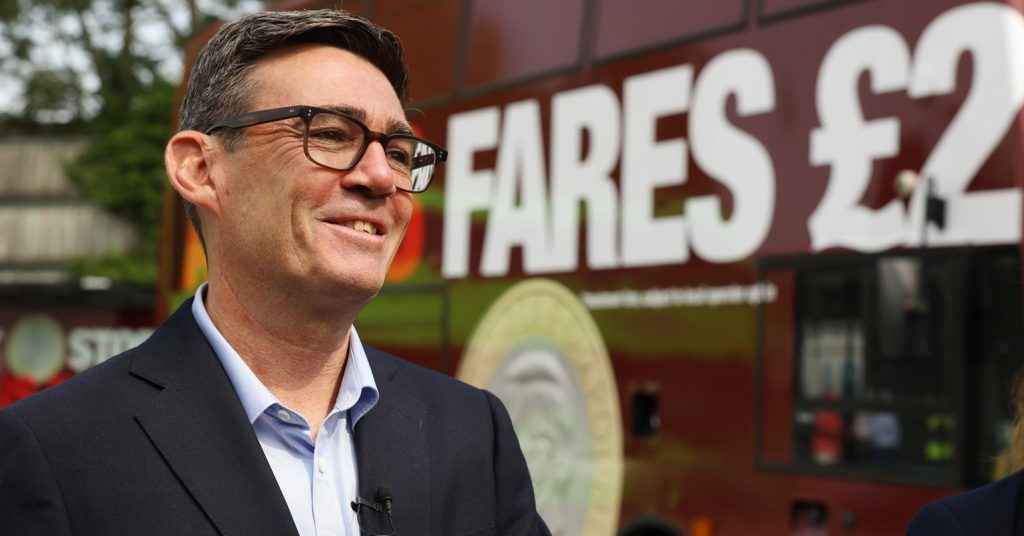
So Burnham’s predicament is already emerging. Sticking to the 2024 election manifesto and fiscal rules will make it harder for him to deliver the headline promises and the change that he has paraded. Faced with neoliberal constraints, Burnham has so far made small concessions. These include a £45 a year (86p a week) cut in the household energy bills, £2 bus fare cap and £1,100 a year business rate cut (£21.15 a week) for the hospitality industry. These will be welcomed by many but won’t make a lot of difference to shrinking household budgets.
Within the iron grip of neoliberalism, Burnham may tinker at the edges and try to present a humane face of neoliberalism, but wholesale changes are unlikely. How he deals with water, energy, housing, profiteering, healthcare, regressive taxation, public investment and inequitable distribution of wealth will define his period in office. Corporations and the super-rich and their control of media and the means of production will continue to be a huge barrier to a new social settlement. We will have some answers soon as the date of the autumn budget approaches.
Prem Sikka is an Emeritus Professor of Accounting at the University of Essex and the University of Sheffield, a Labour member of the House of Lords, and Contributing Editor at Left Foot Forward.
Image credit: Lauren Hurley / Number 10 – Creative Commons
Left Foot Forward doesn't have the backing of big business or billionaires. We rely on the kind and generous support of ordinary people like you.
You can support hard-hitting journalism that holds the right to account, provides a forum for debate among progressives, and covers the stories the rest of the media ignore. Donate today.
Donate today