What the drama in Haringey shows us about ‘pragmatic’ politics
The controversy in Haringey shows that, for all that politicians claim their policies to be neutral, that's not how politics works.
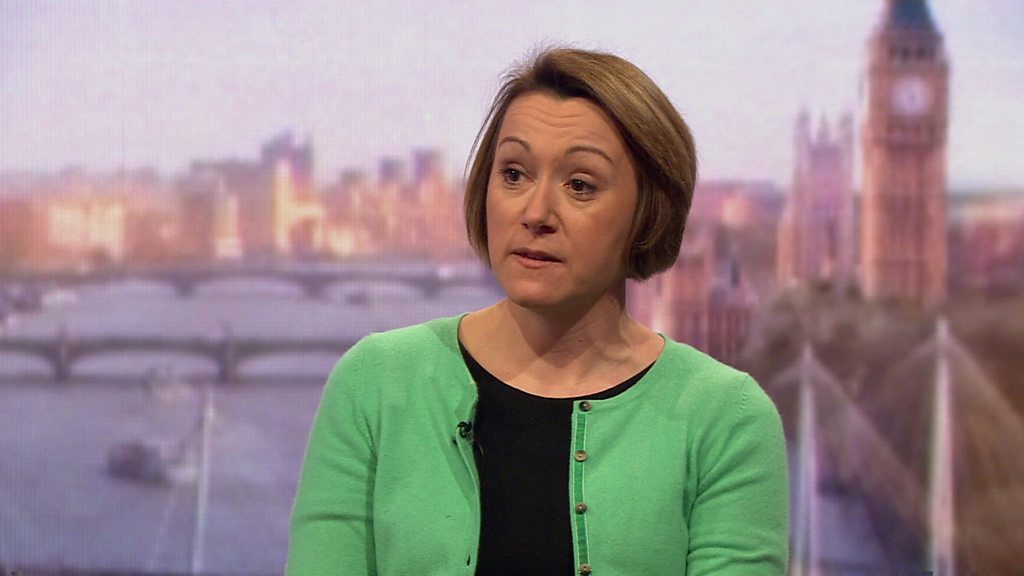
In an interview following her resignation as leader of Haringey Council last week, Claire Kober provided one of the most concise summaries of a politics first popularised in the UK by Tony Blair (under the influence of ‘Third Way’ sociologist Anthony Giddens) – the ideology of ‘pragmatism’:
“I’m quite a practical, pragmatic person in all areas of my life. My politics are defined by an approach of: ‘Here’s a problem, let’s solve it.’
“But we’re now in a political context that is much more ideological. And my politics aren’t the right politics for that time. So you’re either in denial about that, or you accept it, and say it’s time to move on.”
‘Blairism’, ‘centrism’, the rise of the ‘Spads’ and self-proclaimed ‘policy wonks’, were pervasive trends under successive New Labour governments and continued under the coalition government of 2010-15.
These trends rested on the assumption, made explicit by Blair, that ‘ideology’ was ‘dead’, and that the work of progressive government – local and national – is to find left-of-centre solutions that are more rational (because they help more people at lower cost) than the alternatives.
In recent years, wonks in fields like public service design and ‘user experience’ have dumbed this politics down yet further, opting simply for the term ‘what works’.
The coalition, for instance, created the ‘What Works Network’, which ‘uses evidence to make better decisions to improve public services’. This brash phrase, issued by local and national level politicians, is meant to make us think them vigorous and practical – people who get things done, and don’t ‘play politics’ with key policy areas. Yet the claim by politicians to be only interested in ‘what works’ reeks of arrogance and narrow-mindedness.
How can politicians be so sure of their own rational judgement? Can they honestly believe they have alighted upon the perfect policy solutions to a given problem?
Though it certainly introduced some key redistributive and social democratic policies, laying claim to a ‘post-ideological’ politics meant that in government the British party of the left – Labour – played straight into the hands of the dogma that had animated the New Right in the 1970s and ‘80s: neoliberalism.
Inspired by Friedrich Hayek’s and Milton Friedman’s moralising injunctions to displace collective forms of public life with market mechanisms, the ideology was not perfected, as many leftists imagine, under the Reagan and Thatcher administrations but rather, as the late Stuart Hall saw, under the Clinton and Blair ones – and then through the self-styled ‘heir to Blair’ David Cameron.
The social rejection of ‘expertise’ in the run-up to the UK’s 2016 referendum on EU membership was often exaggerated by those – like Michael Gove – with vested interests. It is not expertise itself that people are tired of, but rather the way it is portrayed.
Expertise in the fields of policy and economy is invariably and inescapably politically partisan. It was the neoliberal hubris and Third Way ‘pragmatist’ arrogance of laying claim to ‘neutral’ political-economic expertise that led to the economic crisis of 2008-present.
The more recent, correlative political crisis of 2016 to the present is a result of people’s disillusionment with precisely the politics of pragmatism.
Why this matters is that ‘what works’ never works for everyone. Every policy works better for some people than for others. The privatised redevelopment of Haringey could work well for the young, middle class white people who have been moving to the area in recent years. It might not work so well for many who are already there.
At a Stop HDV demonstration last year, I witnessed an older, lifelong resident of the borough, breaking down as she addressed the small but dedicated group of protestors. She spoke of her love for Tottenham Hotspur, of how she had always sought to live close to the stadium at White Hart Lane, and cried as she talked about the plans to demolish her home and forcibly relocate her.
What the political pragmatists need to wake up to is that their pragmatism invariably reflects their privilege. The effects of policy choices are uneven, and are experienced structurally. Ideology never died, and people are tired of the conceit of the self-proclaimed pragmatists.
There is no ‘neutral’ policy in politics. That, in a nutshell, is why ‘what works’ won’t work anymore.
Dr Ben Whitham is a Lecturer in International Relations at De Montfort University, and is Associate Fellow of the Higher Education Academy (AFHEA).
Left Foot Forward doesn't have the backing of big business or billionaires. We rely on the kind and generous support of ordinary people like you.
You can support hard-hitting journalism that holds the right to account, provides a forum for debate among progressives, and covers the stories the rest of the media ignore. Donate today.
Donate today