Right-Wing Media Watch: The right wants to monetise a carnival built on resistance and inclusion
A carnival that grew from resistance to racism should not become a privilege reserved for those who can afford the ticket.
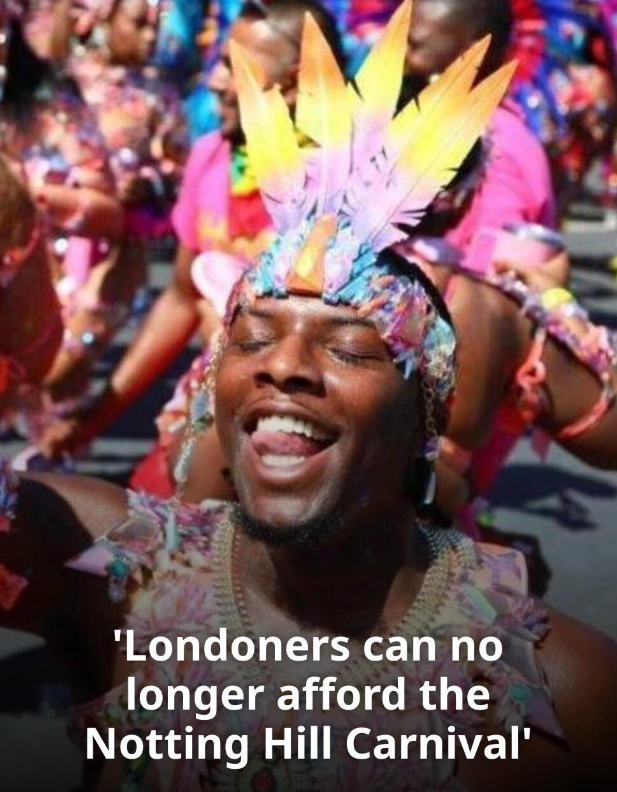
Every year, around two million people descend on West London over the August Bank Holiday weekend to celebrate Notting Hill Carnival. And, almost as reliably, the right-wing media use the occasion to attack it.
Right on cue, the Daily Express published an article questioning whether Londoners can still ‘afford’ the carnival, reviving familiar complaints about policing costs, disruption and public spending.
Written by James Ford, who was an adviser to former London mayor Boris Johnson, the piece takes aim at a festival that has become one of Britain’s most recognisable celebrations of Caribbean culture and Black British identity.
But the history of Notting Hill Carnival makes Ford’s argument about taxpayers’ money difficult to separate from the wider political and cultural hostility that has surrounded the event since its beginnings.
Notting Hill was home to a growing West Indian community following the arrival of the Empire Windrush in 1948, but Black residents faced racism, intimidation and violence. The area had been a stronghold of Oswald Mosley’s far-right movement and was the scene of attacks on Black communities by groups of white youths.
The carnival emerged from a period of racial tension and violence in west London during the 1950s. It developed as a celebration of Caribbean culture, community and resistance. Over the decades, it has grown into a huge public event reflecting the diversity of modern London, bringing together people across racial, religious and sexual identities.
That history matters when considering Ford’s proposal.
“I take great exception to the Notting Hill Carnival,” Ford writes. “Not because the event is associated with an orgy of violent crime and stabbing. Not because of the extent to which it inconveniences local residents. Not even because of the staggering number of police officers injured each year.
“My beef is with the economics of the Notting Hill Carnival. And, more specifically, the value that London taxpayers get from it versus the subsidy they must cough up each year. Because, whilst the carnival may seem like a free day out, it is far from it.”
Ford then points to the costs associated with the event, including around £1 million for cleaning up the streets, £13.5 million in policing costs in 2024 and a £5.6 million City Hall grant.
He puts the total cost to taxpayers at around £20 million a year.
There is, however, another side to the economic argument.
Ford acknowledges that supporters point to the economic activity generated by the carnival, estimated at £396 million. Even using his own figures, that would represent a substantial return to the wider London economy compared with the public funding he identifies.
Yet Ford remains sceptical, arguing that the supposed economic benefit “disappears into the pockets of traders, food vendors, hoteliers and landlords.”
But that is rather the point of economic activity. Money spent by visitors doesn’t become meaningless simply because it reaches businesses. It helps generate revenue for food vendors, shops, hotels, transport operators and other businesses. For many small businesses and traders, large public events can provide an important source of income.
Ford’s answer is to turn the carnival into a paid event, suggesting a £10 charge for every attendee.
“I don’t want to cancel the carnival. I just want to stop it being a giant black hole for taxpayers’ cash. Surely, we have better things to spend £20m on each year?” he concludes.
The problem with this ‘solution’ is that it fundamentally changes what Notting Hill Carnival is.
A £10 admission fee might sound modest to someone on a comfortable salary. But for a family on a low-income struggling with the cost of living, the bill quickly mounts. The consequence would be to create another barrier between people and a public cultural celebration.
And that goes directly against the ethos of the carnival. For decades, the carnival has represented a public celebration of a Black British culture that once faced hostility, violence and exclusion. Its existence is a reminder of how far Britain has travelled since the racist attacks of the 1950s, and of why public spaces where different communities can come together still matter.
If the right really wants to debate public spending, there are plenty of questions worth asking.
But turning Notting Hill Carnival into an annual target, then proposing to put a price on participation, risks losing sight of what the event actually represents.
A carnival that grew from resistance to racism should not become a privilege reserved for those who can afford the ticket.
Left Foot Forward doesn't have the backing of big business or billionaires. We rely on the kind and generous support of ordinary people like you.
You can support hard-hitting journalism that holds the right to account, provides a forum for debate among progressives, and covers the stories the rest of the media ignore. Donate today.
Donate today