Andy Burnham should tax wealth more and work less
If wealth inequality is allowed to grow, disparities will only widen, disenchantment will only harden and challenges will only heighten and we’ve got enough of all three already.
The UK economy, based on the total value of all goods and services it produces, is estimated to be around £2.8trillion making it the fifth largest in the world.
So why, in the fifth largest economy in the world, are there still four million children living in poverty? And before some less charitable start screaming ‘tell their parents to get a job’, seven in every ten of those children have at least one parent working.
Politicians talk of the need to grow the economy as though growth alone will deliver a utopian world of milk and honey, a world where all of our nation’s ills vanish one by one, as the milk and honey flows.
Don’t get me wrong, the benefits of growth, when distributed fairly, are a warm and welcoming thing. But economic growth, in my opinion, serves little purpose if the proceeds of that growth do not narrow the obscene wealth inequalities between those who have, and those who have not.
If growth does not enable hard working people to be paid a wage that reflects the true value of their labour, or it does not offer those same people the prospect of seeing their children enjoy better opportunities than they themselves had, then those people have every right to ask ‘what’s the point?’
Wealth inequality has widened and deepened over decades. A trickle-down economic model has not trickled much further down than beyond a tiny slither at the top. And to underline my point, when around fifty families in the UK enjoy more aggregated wealth than the poorest 34 million of its citizens, something, somewhere, has been allowed to go horribly wrong.
Last year the Trussell Trust network of food banks issued 2.6 million emergency food parcels. Of those, more than 900,000, were destined for children. Just let that sink in. Food is a basic human need. No-one in the UK should ever have to face the thought, or worse still the reality, of not having food to put on the table.
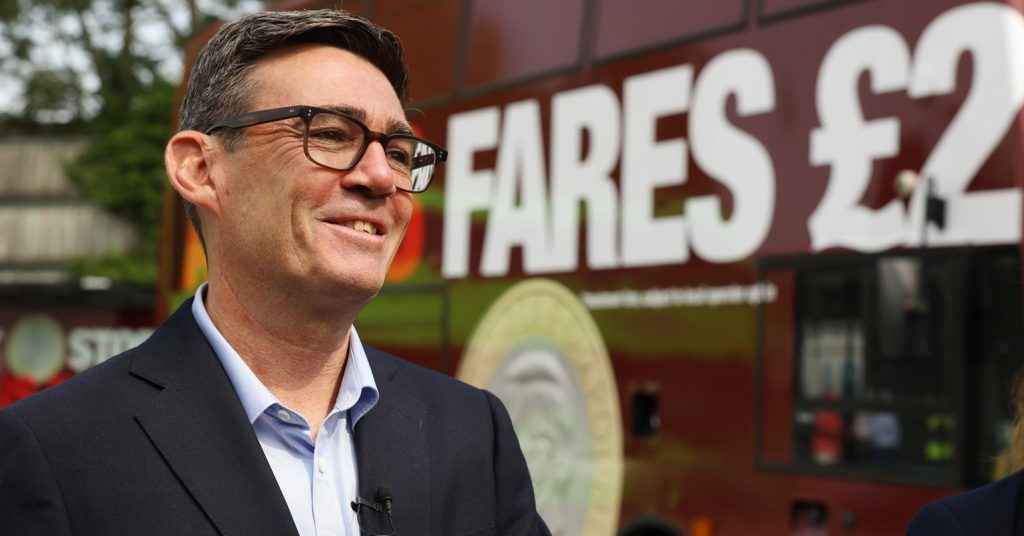
Andy Burnham was right when he said Britain needs a circuit breaker and that he wanted a new political and economic model.
That intent is to be applauded, but what that will look like has yet to be fully revealed and will likely take a decade or more to be embedded, not to mention the removal of obstacles placed in the way by vested interests.
But there are things that can be, and have already been, done to help.
In one fell swoop, Labour, in lifting the two child benefit cap, will have helped to pull half a million children from the clutches of poverty that would otherwise have gripped them tight and pegged their educational, social and health prospects firmly to the ground.
And whilst some political parties may try to make capital by portraying the removal of the two child benefit cap as unaffordable, how affordable is it for the future of those children and therefore of our country, to see their, and hence our, opportunities diminished through no fault of their own but circumstance.
And on the subject of affordability, the £3billion annual price tag pales into insignificance when you consider there was provisionally estimated to be a UK tax gap (in 2024/25) between what was due and what was collected, of just over £59billion.
By increasing the minimum wage, expanding free school meals and in creating the conditions for real wage growth, this Labour government have done much to help families and their children.
That is to be welcomed, but it is still not enough when the economy feels like it’s not working for them.
The cost of the weekly shop is still far too high. Filling up the car requires a couple of paracetamols to numb the pain of paying and when the winter cold bites hard, as it will in just a few short months’ time, heating your home may well require you to think about a second mortgage.
But here’s the thing. Work feels like it’s taxed more vigorously than wealth. Maybe that’s because it easier to collect, especially when it’s your employer doing the collecting, passing the collection to the ‘tax man’ and then handing you what little is left over, after all other deductions, of course.
And so, I can only hope that the new political and economic model Andy Burnham talks of, is one which will be bold, brave and radical enough to tax the proceeds of wealth more, through implementing a wealth tax, and the value of work less, by raising PAYE thresholds.
When someone earning just £12,571 per year pays income tax because PAYE thresholds have been frozen since 2022/23, increasing those thresholds, particularly at the lower rate, is a moral and ethical imperative.
In 1990, the wealth of billionaires in the UK represented 4% of its Gross Domestic Product; in 2025 it was 22%, more than five times higher.
Someone earning an average wage in 1990 would have earned around £14,000 per annum and in 2025 around £35,000; just two and a half times higher.
And whilst for some that might seem ‘fair enough’, it’s worth remembering that an average priced house in 1990 could have been purchased with around three and a half times that average salary, whereas in 2025 it would have been just over eight. No wonder home ownership for our young has become the stuff of dreams.
If wealth inequality is allowed to grow, disparities will only widen, disenchantment will only harden and challenges will only heighten and we’ve got enough of all three already.
To be or not to be (a wealth tax)?
That is the question.
Image credit: Lauren Hurley / Number 10 – Creative Commons
Left Foot Forward doesn't have the backing of big business or billionaires. We rely on the kind and generous support of ordinary people like you.
You can support hard-hitting journalism that holds the right to account, provides a forum for debate among progressives, and covers the stories the rest of the media ignore. Donate today.
Donate today