Woke-Bashing of the Week: Culture vultures sweep on Little House on the Prairie, not realising the original was as ‘woke’ as they come
The American frontier was never as uniformly white as popular culture suggested. Acknowledging that fact is not "wokeifying" history. It’s recognising that history was always more complicated than the myths Americans, and television, liked to tell.
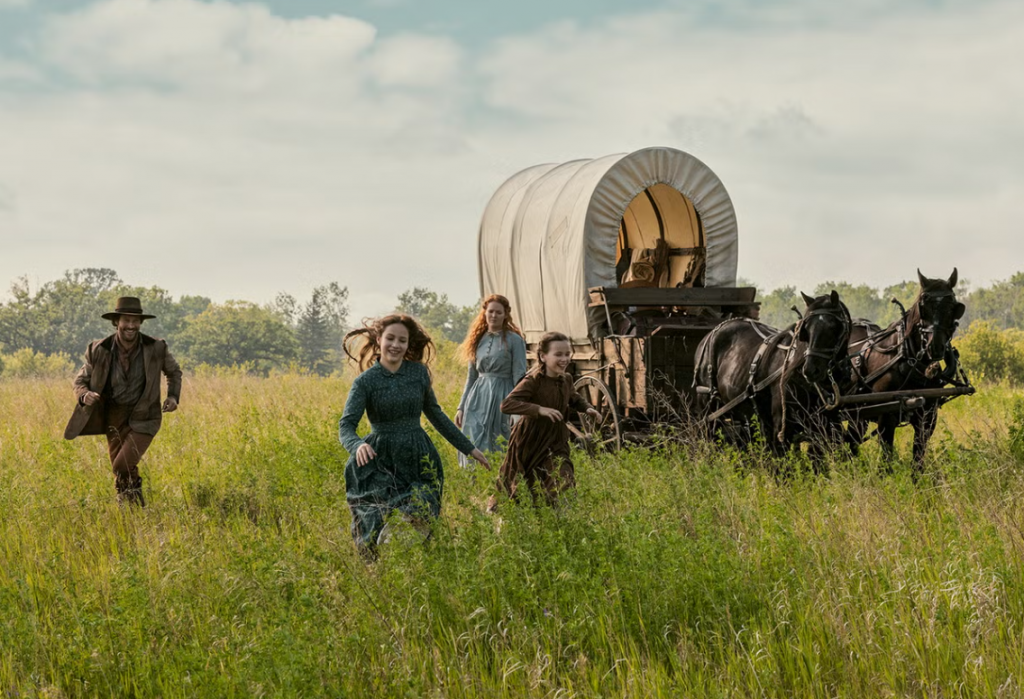
It didn’t bode well from the offset.
When Netflix announced last year that it was rebooting Little House on the Prairie, former Fox News host and MAGA cheerleader Megyn Kelly fired off a warning to the streamer: “If you wokeify Little House on the Prairie I will make it my singular mission to absolutely ruin your project.”
Right on cue, with the release of the eight-episode reboot, the outrage machine has lurched into action. Purists and culture warriors alike are denouncing the series for being “woke.”
Their evidence is, apparently, the presence of a Black doctor, a Black storekeeper, an Osage family, and a French Canadian woman who wears trousers and embraces free love. As a Slate critic put it, Netflix “did indeed woke-ify” the story by surrounding the Ingalls family with a more diverse cast of neighbours than viewers of the 1970s television series might remember.
As is so often the case when the culture warriors get their knickers in a twist, the irony is hard to miss.
The original television series, which ran from 1974 to 1983, was hardly an exercise in reactionary nostalgia. Based on Laura Ingalls Wilder’s semi-fictionalised accounts of frontier life in the 1870s and 1880s, it regularly tackled racism, antisemitism, addiction, misogyny, sexual assault and domestic violence. Far from being apolitical comfort television, Little House frequently used its wholesome setting to confront difficult social questions.
This was already something of a reworking of Wilder’s books which were never apolitical. Published between 1932 and 1943, they have sold more than 73 million copies and helped shape America’s mythology of the frontier. But that mythology was deeply selective. As the Conversation notes, Wilder presented “a vision of the frontier, and by extension America, as a place defined by an exceptional freedom – but only for white settlers.” Her portrayal of Indigenous and Black people has long attracted criticism, culminating in the American Library Association removing Wilder’s name from its prestigious children’s literature award in 2018.
In that context, Netflix’s decision to broaden the story’s perspective is less a radical rewrite than an acknowledgement of historical realities the original books largely ignored. The reboot introduces Indigenous homesteaders, reflecting the Indian Homestead Act of 1875, which allowed some Indigenous people to claim land in the so-called public domain. Its multi-racial cast is an attempt to tell a fuller story of the American frontier rather than perpetuate an exclusively white one.
Melissa Gilbert, who played Laura Ingalls in the original television series, was quick to call out Kelly’s outrage. Responding on social media, she wrote:
“Ummm…watch the original again. TV doesn’t get too much more ‘woke’ than we did. We tackled: racism, addiction, nativism, antisemitism, misogyny, rape, spousal abuse and every other ‘woke’ topic you can think of. Thank you very much.”
Gilbert’s point exposes the hollowness of much of today’s anti-woke narrative.
“Woke” has become less a meaningful criticism than a reflexive label attached to anything that departs from an imagined version of the past.
The reboot’s showrunner, Rebecca Sonnenshine, said what a lot of us think. “I’m not even sure what ‘woke’ means to people anymore,” she told Variety. While the term originally referred to being alert to social injustice, she argued it has degenerated into “a catch-all word for things that I don’t quite understand.” What many critics seem to fear, she suggested, is simply that “something from their childhood will be portrayed in a way that scares them.”
Indeed. The Little House on the Prairie backlash says less about Netflix than it does about the hollowness of today’s anti-woke movement, which clings on to an imaging version of the past.
The American frontier was never as uniformly white as popular culture suggested. Acknowledging that fact is not “wokeifying” history. It’s recognising that history was always more complicated than the myths Americans, and television, liked to tell.
Left Foot Forward doesn't have the backing of big business or billionaires. We rely on the kind and generous support of ordinary people like you.
You can support hard-hitting journalism that holds the right to account, provides a forum for debate among progressives, and covers the stories the rest of the media ignore. Donate today.
Donate today